
Dynamic responses depending on previously given answers
Instead of rigidly defining the answers in a given question, you can use the answers that the respondent selected or did not select on previous pages of the survey. This option is available for two types of questions: multiple-choice and matrix questions.
This option allows us to refer directly to specific, provided answers, rather than hypothetical or very general ones, in the case where the question is completely imposed by us.
Let's assume that we ask the respondent to rate their holiday stay in the Canary Islands and each of the elements such as: hotel, meals, resident, surroundings, on a scale of 1 (very bad) – 5 (very good). By using dynamic answer insertion, in subsequent questions we can ask for an in-depth opinion regarding only those elements that were rated as very bad or bad (scales 1 and 2).
How to draw from previously provided answers?
When adding a question (See how to add a question), click on the "Insert dynamically from previous questions" item.
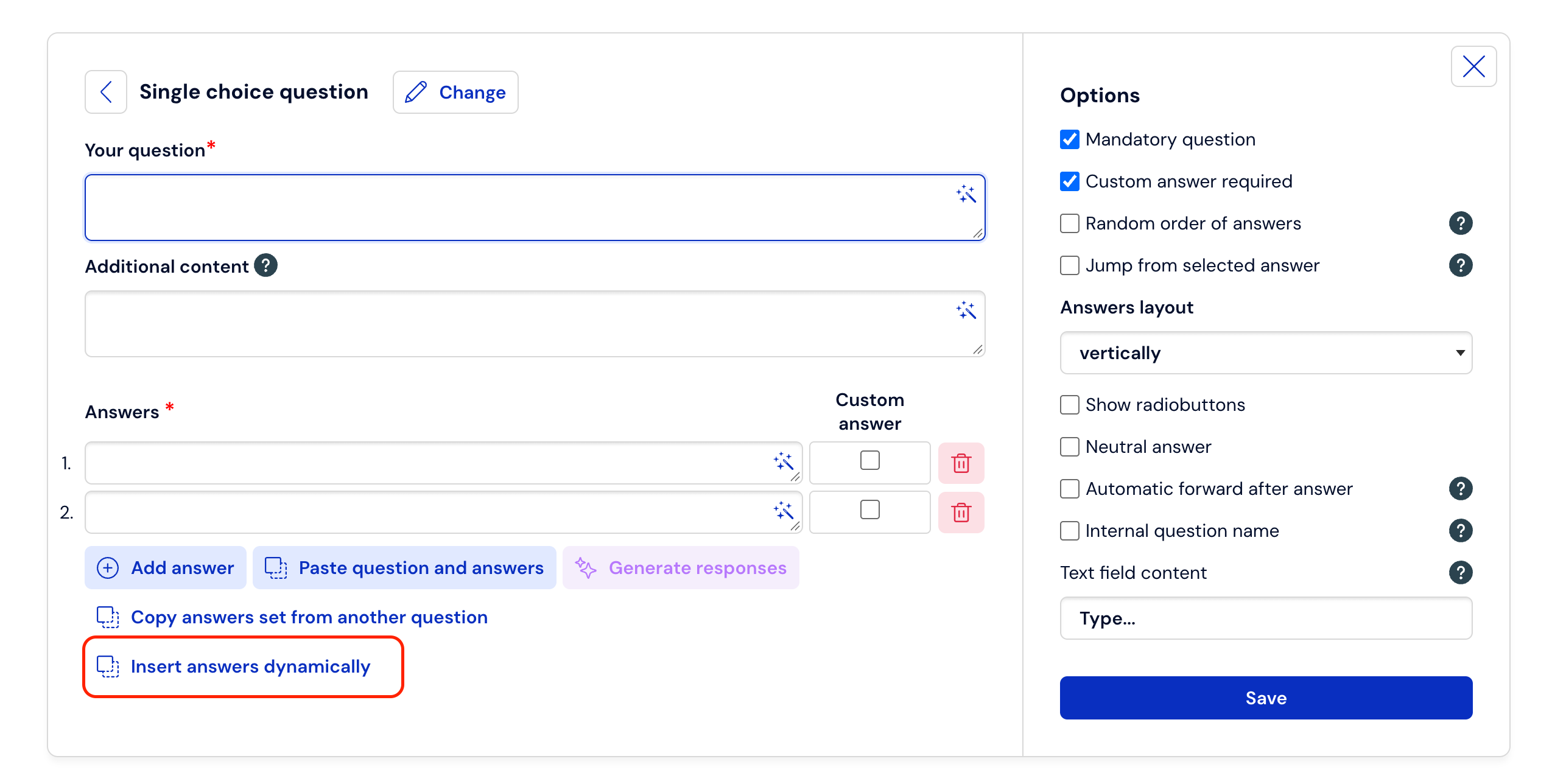
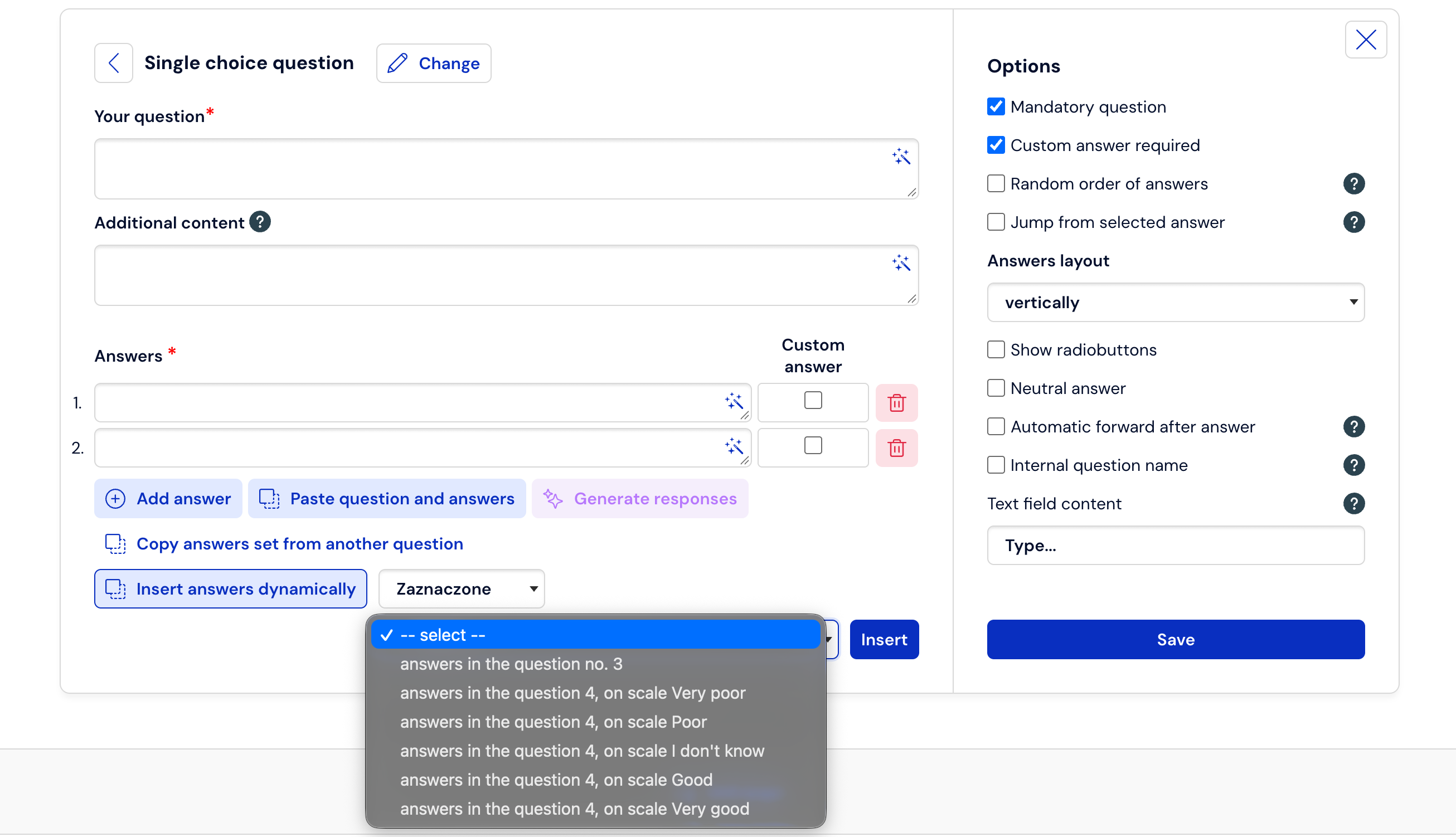
Select from the drop-down list whether you want to draw answers that the respondent selected or did not select in a previous question.
Next, select the question from which the answers are to be inserted. You can select either a multiple-choice question or a matrix question. In the case of a matrix question, you must also select which scale marking in a given answer will result in it being drawn (2).
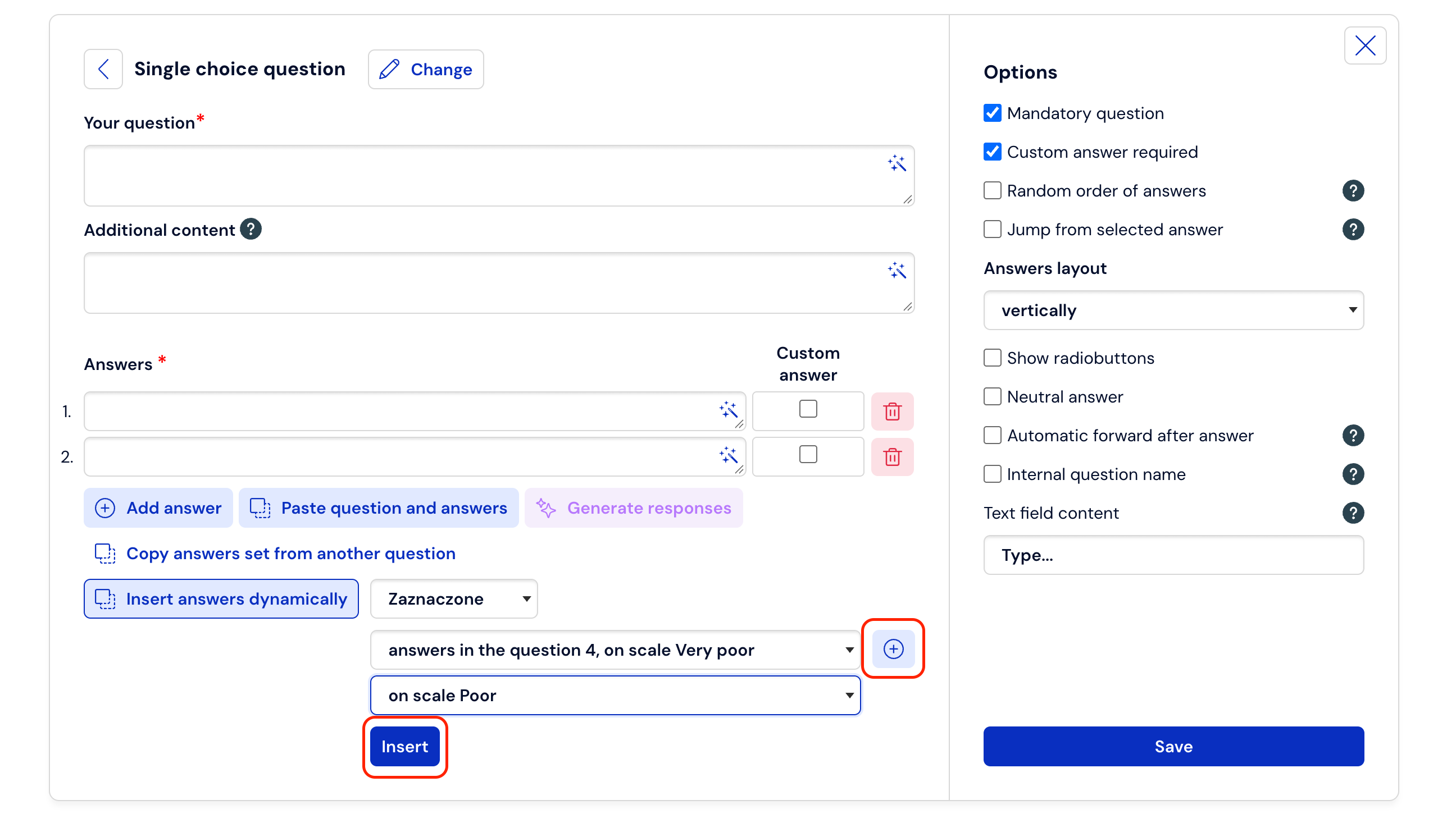
By clicking the green plus, you can add more than one scale from a matrix question to insert answers from several scales, e.g., Bad and Very Bad (3). Confirm everything by clicking Insert.
Confirm the introduced changes by clicking Save (4).
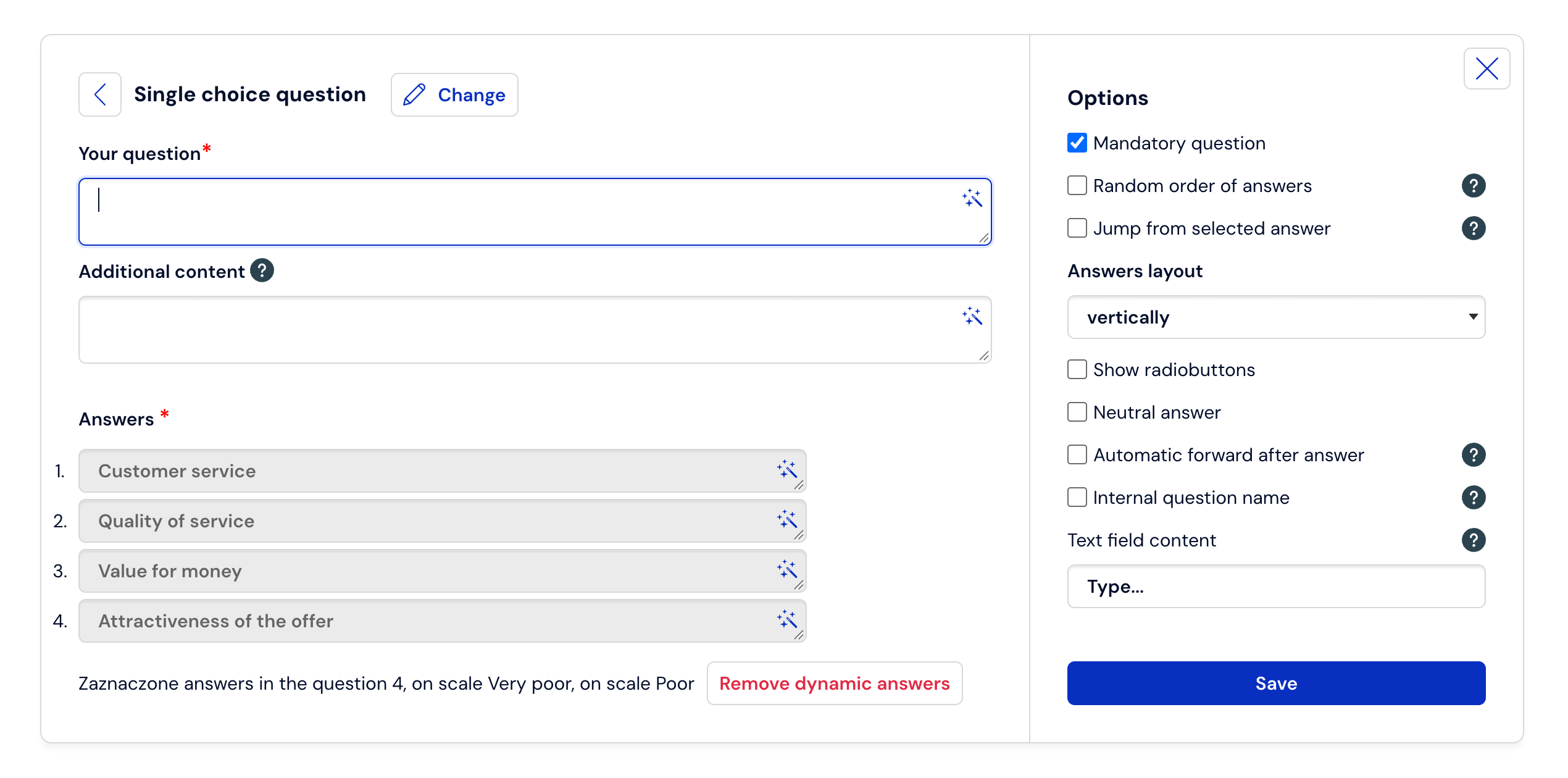
What is worth remembering?
This option is active only if at least one multiple-choice question or single-choice matrix question appeared on the previous survey pages.
Answers previously provided by the respondent can be used only in closed single-choice and multiple-choice questions, single and multiple matrix questions, ranking questions, drop-down lists, point allocation questions, and form-type questions.
In the analysis of the results, a question defined this way has a cafeteria identical to the cafeteria of the question it is based on